Plan the campaign around the buyer journey
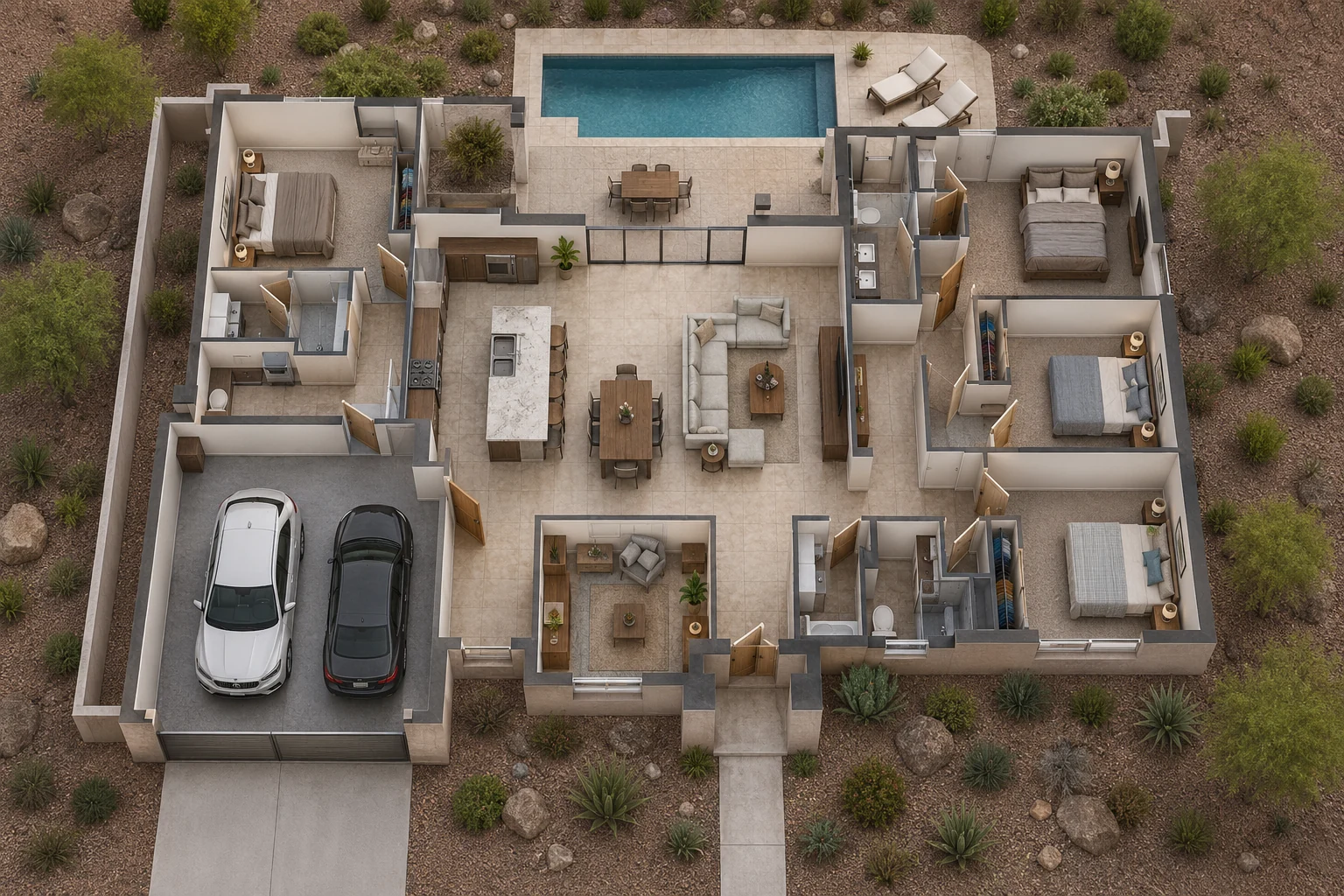
A building exterior introduces the project; an arrival or lobby view explains the experience of coming home; an interior and floor plan help a buyer understand a specific residence. Pool decks, lounges and terraces add value when they communicate amenities that are part of the supplied design.
Decide which images belong on listing pages, presentation decks and printed collateral before ordering. A wide website hero may need a different crop from a vertical campaign asset, so allow space in the composition for both uses.
Represent water, glazing and outlooks carefully
Reflections, tinted glazing and bright daylight strongly influence the appearance of a waterfront concept. Give the artist product references and a clear lighting brief so the building materials remain legible rather than being overwhelmed by reflections.
When marketing a particular unit's outlook, provide authorized photographs from an appropriate height and position. Do not imply that an illustrative waterfront setting guarantees a view from every residence. Distinguish proposed landscaping, furniture and future surrounding buildings where they remain subject to change.
Keep amenity and hospitality images coordinated
An amenity deck or hospitality interior requires a furniture and equipment brief as well as architecture. Specify seating arrangements, shade structures, pool edges, lighting and planting so the image communicates the intended use.
For a Miami, Miami Beach or wider South Florida campaign, settle the shared visual direction before commissioning every camera. A single coordinated finish schedule helps prevent different views from suggesting different versions of the same development.